
Introduction
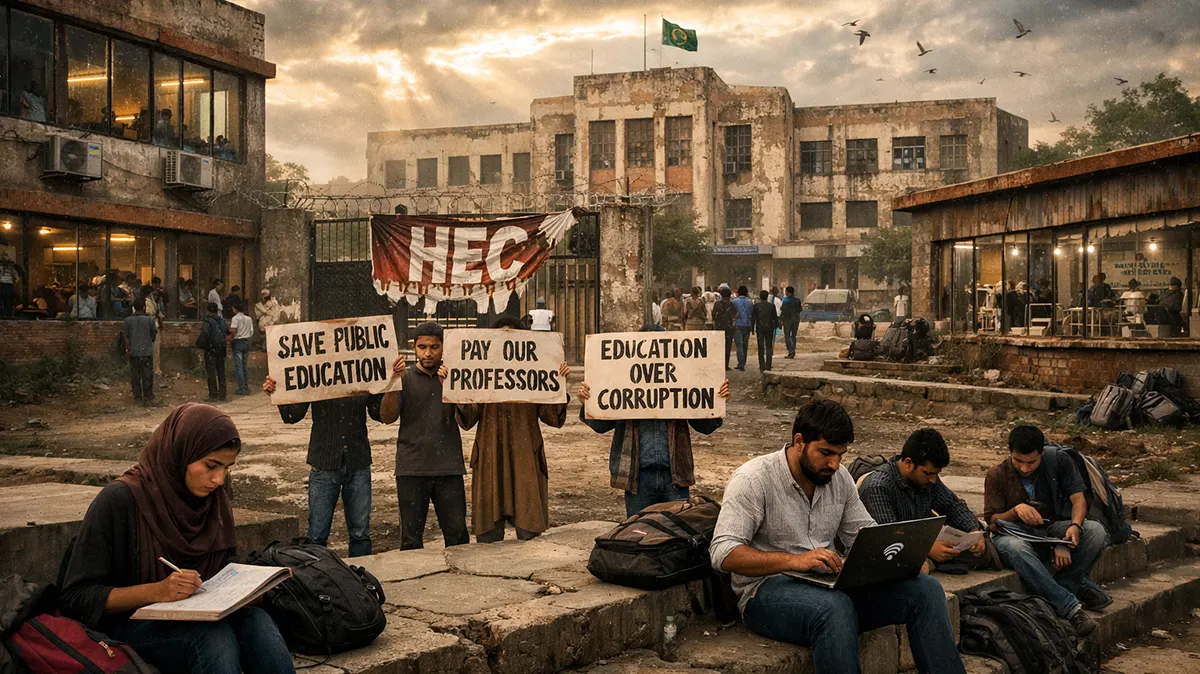
The education system in Pakistan is in a crisis in 2026 that has never been experienced before, impacting millions of children at primary, secondary, and higher learning institutions. This is not only an institutional crisis but also a decade-long entrenched structure of financial and governance failures (HEC, 2023). Using the human capital theory (Becker, 2020), education is one of the key factors contributing to labor productivity, innovation, and social mobility. Nevertheless, this goal has not been met in Pakistan due to underfunding, bad governance, and inadequate infrastructure.
The consequences of a poorly functioning education system are immense when the proportion of individuals under the age of 30 is almost 40%, as it affects job opportunities, rapidly building competencies, and global competitiveness (UNESCO, 2022). The analytical framework that will be necessary to comprehend the crisis is based on an economic, sociological, and policy-type approach. This paper describes the causal dynamics, aggregate impacts, student body experiences, and possible solutions and provides an in-depth, well-founded literature overview of the 2026 educational issues in Pakistan.
Key Challenges in Higher Education
Financial Constraints and Resource Limitations
A cause of the education crisis in Pakistan is financial instability. Public universities often have a budget deficit, which impacts the remunerations of the staff, research investments, and maintenance (World Bank, 2021). Resource dependence theory (Pfeffer and Salancik, 2021) showed that institutions relying too much on unstable funding sources struggle to maintain their independence, which limits their ability to innovate and provide quality education.
Late payments of scholarships worsen the situation and lead to discontinuing studies and high dropout rates. Underfunding research inhibits the creation of knowledge, decreasing the Pakistani reputation in the international academic tables and stifling innovation (HEC, 2023).
Table 1: University Funding Shortfalls (Public Sector)
| Category | Funding Gap | Impact |
| Salaries | PKR 8–10 billion | Delayed faculty payment, low morale |
| Research | PKR 5 billion | Limited publications & innovation |
| Infrastructure | PKR 7 billion | Poor labs, libraries, IT access |
Textual Graph: Student-to-Faculty Ratio (2018–2023)
2018 |███████ 25:1
2019 |████████ 28:1
2020 |█████████ 30:1
2021 |██████████ 32:1
2022 |███████████ 34:1
2023 |████████████ 36:1
The increasing ratios are an indicator of the increasing faculty shortages, which harm quality mentorship and academic support (HEC, 2023). The human capital development theory notes that quality of education is highly related to the interaction between students and teachers, which, under such circumstances, becomes dramatically poor (Becker, 2020).
Governance and Policy Inefficiencies
Education is a problem that is increased by governance failures. Political intervention in hiring processes, overlap in regulatory structures, and uneven policy implementation in terms of institutional independence and responsibility are all contributing factors to the problem of education (World Bank, 2022). The text of the public choice theory assumes that the interests of bureaucrats often conflict with the goals of education, thus making them unproductive policy makers (Olson, 2021).
These gaps in governance in Pakistan are reflected in the form of slowness in updating curriculum, discontinuous educational standards in different regions, and insufficient strategic planning. The long-term solutions entail clear-cut merit leadership, regular regulatory guidelines, and effective supervisory systems that will enable the universities to operate efficiently.
Curriculum Relevance and Skills Mismatch
Another structural weakness is the lack of alignment between academic training and labor market demands. Many university programs prioritize theoretical education over practical/industry-relevant skills (UNESCO, 2022). The digitalization and automation of the world economy have exacerbated this deficit.
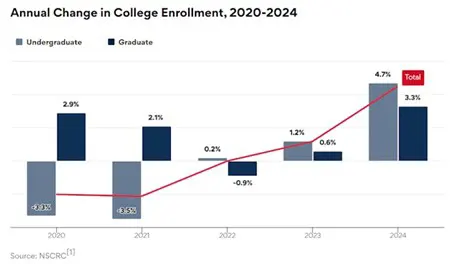
The human capital theory argues that the economic worth of education relies on the relevant and productive skill acquisition (Becker, 2020). The graduates of Pakistan are not always able to meet these demands, which mean that the country has high underemployment rates and a long job-seeking process. Comparative research indicates that tertiary enrollment in the applied sciences and vocational education in Pakistan is below that of other countries in the region, which only underscores the inefficiencies that exist in the system.
Student Impacts
Academic Delays
The impacts of the education crisis are very tangible for students. Regular crises, bureaucratic issues, and procrastinated exams lead to prolonged schedules for degree completion, which impact career advancement and mental health (HEC, 2023).
Limited Resources
Most institutions lack modern laboratories, updated libraries, and digital learning resources, which establishes differences in learning performance. The constructivist theory of learning suggests that knowledge building requires an active process and access to resources (Piaget, 2021). There are constrained facilities; hence, they impede experiential learning and critical thinking.
Mental Health Challenges
Monetary instability, school frustration, and work demands are some of the factors that lead to anxiety, depression, and stress stages among students. Limited counselling services exacerbate these problems (ResearchGate, 2023). Education reforms should integrate mental health support holistically to enhance students’ resilience.
Adaptive Strategies for Students
Although the education system in Pakistan is struggling with systematic issues, the students have devised several coping mechanisms to overcome the crisis and enhance their employment and learning results. These plans observe resilience, creative thinking, and a proactive attitude toward compensating for the institutional flaws.
- Development of digital skills—Students have an ever-growing dependency on online courses and certification programs in fields like programming, data science, digital marketing, and artificial intelligence. These courses are supplementary to conventional university education and provide students with competencies that are very sought after both locally and internationally in the labor markets (World Bank, 2021). Human capital theory (Becker, 2020) argues that there is a direct correlation between the investment made in the acquisition of skills and productivity and future earnings. With the help of social networks, such as Coursera, Udemy, or local services, such as the National Digital Skills Program, students can ignore the inefficiency of the old curriculum and adopt the ability to compete in the new economy.
- Peer Learning Networks—Study groups, student societies, and knowledge-sharing platforms are becoming crucial in offering academic support. In addition to encouraging social constructivism, in which learners construct knowledge through interaction in peer learning networks, problem-solving, critical thinking, and teamwork skills are encouraged (Vygotsky, 2020). Through workshops, peer tutoring, and group discussions, students are able to establish a conducive academic environment that, to some degree, counterbalances deficits in faculty and institutional counseling.
- Internships and Practical Training—Students have the opportunity to engage in on-the-job training, research assistantships, and short-term industry placements, providing them with real-world exposure and enabling them to bridge the gap between theory and practice. The theories of experiential learning underline that learners obtain knowledge better when they practice than when they do not (Kolb, 2021). In Pakistan, the internship is also known to expose students to workplace culture and angst over practical problem-solving and networking, which is essential in overlaying the negative impacts of curriculum-labor market misalignment.
- Financial Coping Mechanisms—Given the scarcity of scholarships and the high cost of education, students are actively adopting diverse financial practices. We can use models such as cost-sharing accommodation, freelancing, private tutoring, and part-time work to manage costs and sustain education (UNESCO, 2022). The above financial standing not only helps in academic advancement but also develops entrepreneurial abilities and financial literacy that are valuable aspects of the rapidly changing economy.
Alternative Educational Pathways
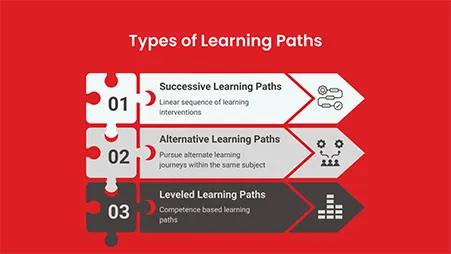
Due to the constraints of the conventional institutions of learning, several families and students are turning to other forms of education that are less rigid, more practical, and can access better education:
- Private Universities: The private institutions should be well-funded, modernized, and have strong industry affiliations. This will help them to present course programs, which are based on the requirements of the market, such as technology, management, and applied sciences. Scholarships, internships, and research collaborations are also quite common in the private universities to offset the shortcomings of the public sector (HEC, 2023).
- Distance Learning Programs: Online universities and distance learning offer students the chance to be able to work around education or personal obligations. Distance education cancels strikes and administrative and geographic limitations and provides access to decent content via online interactive modules, recorded lectures, and virtual laboratories (World Bank, 2022).
- Technical and Vocational Training: Short-duration certifications in codes, electrical engineering, healthcare, and digital media are examples of technical and vocational training, which equip individuals with both useful and employable skills in a short timeframe. These programs are connected to the needs of industries and provide students with ways to direct employment, following and closing the skills gap that is widespread in the Pakistani labor market (UNESCO, 2022).
Policy Recommendations
To resolve the crisis in Pakistan’s education sector, concerted structural reforms are necessary to address financial, curricular, and governance issues. Some recommendations of importance to the policy include:
- Increase Budget Allocation – Government expenditure on education is expected to be close to 4 percent of GDP as estimated by UNESCO to provide funds to train as well as teach staff, infrastructure, research, and other student assistance facilities (UNESCO, 2022). Sufficient financing is essential to enhance the quality of education and human capital development in the long-term perspective.
- Curriculum Modernization – The degree programs must incorporate digital skills, critical thinking, problem-solving, and industry collaboration. Modernization of the curriculum makes graduates capable of the skills that are pertinent to the latest technologies and market needs; thus, it decreases joblessness and underemployment rates among the younger generation (HEC, 2023).
- Faculty Development – Faculty retention and academic quality improvement: Faculty scholarships, professional development, research grants, and international partnerships all incentivize faculty development. The brain drain mitigation policy is key to the preservation of institutional knowledge and high-quality student mentorship (World Bank, 2021).
- Governance Transparency – Merit-based leadership, equal administration in policy enforcement, and independent supervision enhance accountability and institutional efficiency. Open government creates a system that enhances the efficiency of reforms and maximizes the use of resources (Olson, 2021).
- Academia-Industry Cooperation – Effective projects, internships, collaborative research, and skills development programs among universities and industry participants increase graduate employability and lead to innovation. These partnerships also ensure the updating of curricula to reflect emerging economic and technological changes (UNESCO, 2022).
Table 2: National Education Snapshot (2026)
| Indicator | Estimate | Notes |
| Literacy Rate | ~62% | Urban higher, rural lower |
| Youth Population | ~40% | Ages 15–29 |
| Tertiary Enrollment | ~9% | Lowest in South Asia |
| Public Education Spending | ~1.7% GDP | Below UNESCO benchmark |
| Female University Enrollment | ~48% | Regionally uneven |
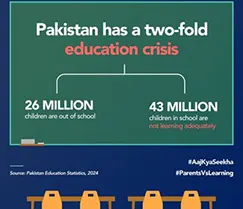
| Out-of-School Children | 22–26 million | Among highest globally |
Future Outlook
Lack of efforts to resolve systemic issues can lead to stagnant innovation, skills shortages, and social inequity. On the other hand, the improvement of reforms would turn the young population into a demographic dividend, which would increase productivity, technological adjustment, and sustainable growth. The combination of theories on the development of human capital, resource dependence, and public choice can provide a systematic approach to the planning of long-term policies.
Conclusion
Pakistan’s education crisis of 2026 is a multi-dimensional issue that exists in the form of financial constraints, gaps in governance, irrelevance of the curriculum, and human resource shortage. Its consequences do not just stop at academic delays to employment, mental health, and competitiveness in the country. Although a systemic change is necessary, digital skill building, an approach to peer learning networks, internships, and alternative educational routes have become adaptive mechanisms to overcome these effects by students and institutions. These indeed need long-term solutions, where greater funds will be required to implement changes in the curriculum, faculty training, openness of governance, and collaboration between academia and industry. A combined approach to such challenges will not only turn the youth in Pakistan into a productive, skilled, and innovative workforce but can also make the crisis an opportunity to develop the country.
Q1: Why is Pakistan’s education system in crisis?
Financial shortfalls, outdated curricula, governance gaps, and faculty shortages are primary causes (HEC, 2023).
Q2: How does the crisis affect employment?
Graduates face underemployment, skill mismatches, and delayed career entry, limiting economic productivity (UNESCO, 2022).
Q3: What can students do to cope?
Digital skills development, peer learning networks, internships, and alternative education pathways help mitigate challenges.
Q4: What reforms are most critical?
Increasing budgets, curriculum modernization, faculty development, governance transparency, and academia-industry cooperation are essential.

Leave a Comment